Competency-Based Learning Pathways
Massachusetts Library System
The Challenge
Library staff across Massachusetts needed structured ways to build skills, but training was fragmented with no credentialing, no progression model, and uneven quality across providers. I led a cross-functional team of internal stakeholders, member subject matter experts, and external course development vendors to design a competency-based framework that could scale statewide.
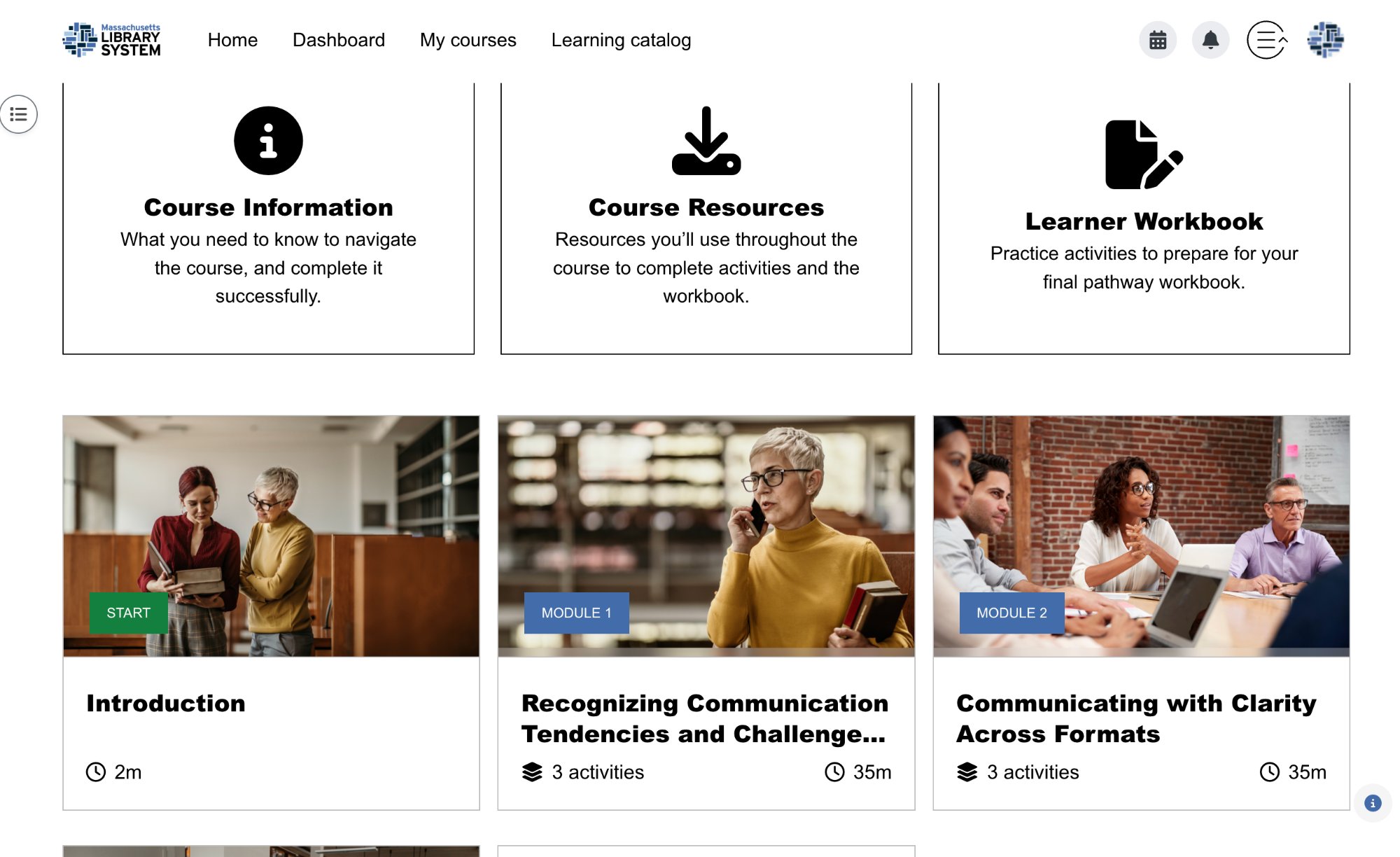
I designed a competency-based framework that supports multiple statewide learning pathways, aligned with IACET standards and adult learning theory. Each pathway is built through a collaborative process involving needs assessment surveys, competency mapping with member experts, and course development managed through external vendors.
What I Led
- Defined competencies collaboratively with stakeholders across library types
- Created a systematic 7-step development process with templates for each phase
- Managed external vendors through course development, review, and revision cycles
- Designed modular pathways with core and elective courses
- Built summative assessments with rubrics and evaluator guidelines
- Conducted statewide needs assessment surveys to validate competencies
- Published pathways in LMS using H5P interactive overviews, digital badges, and structured progression
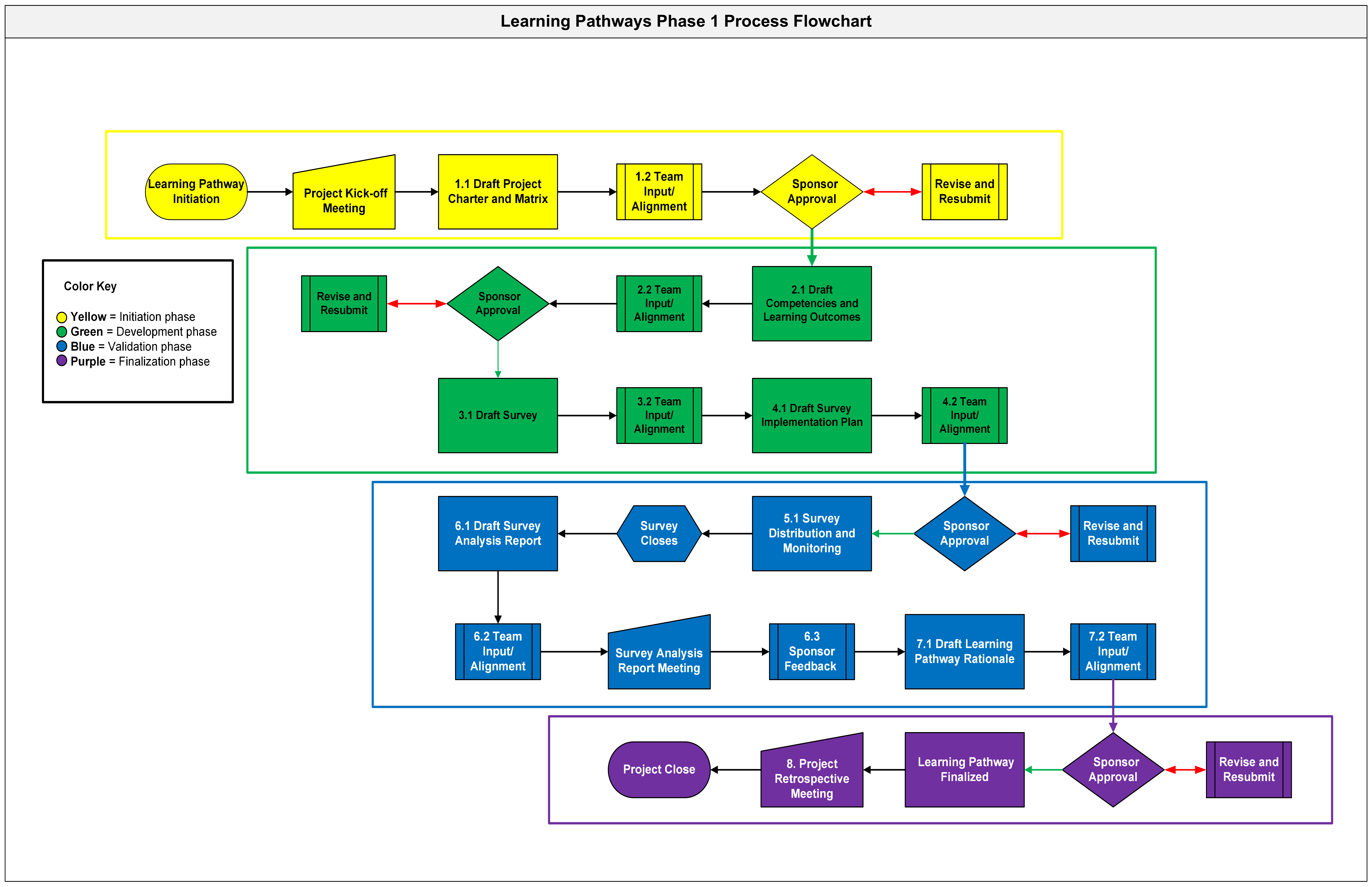
Development Toolkit
I created a replicable 7-step process for developing any new pathway, with defined roles and RACI accountability at every phase:
- Project Charter and Matrix
- Competency and Learning Outcome Development
- Survey Drafting
- Survey Implementation Plan
- Survey Distribution and Monitoring
- Survey Analysis Report
- Learning Pathway Rationale
Results
- Competency-based model that scales statewide
- Four pathways in active development
- Foundation for IACET accreditation and CEU issuance
- Replicable toolkit with templates for every development phase